

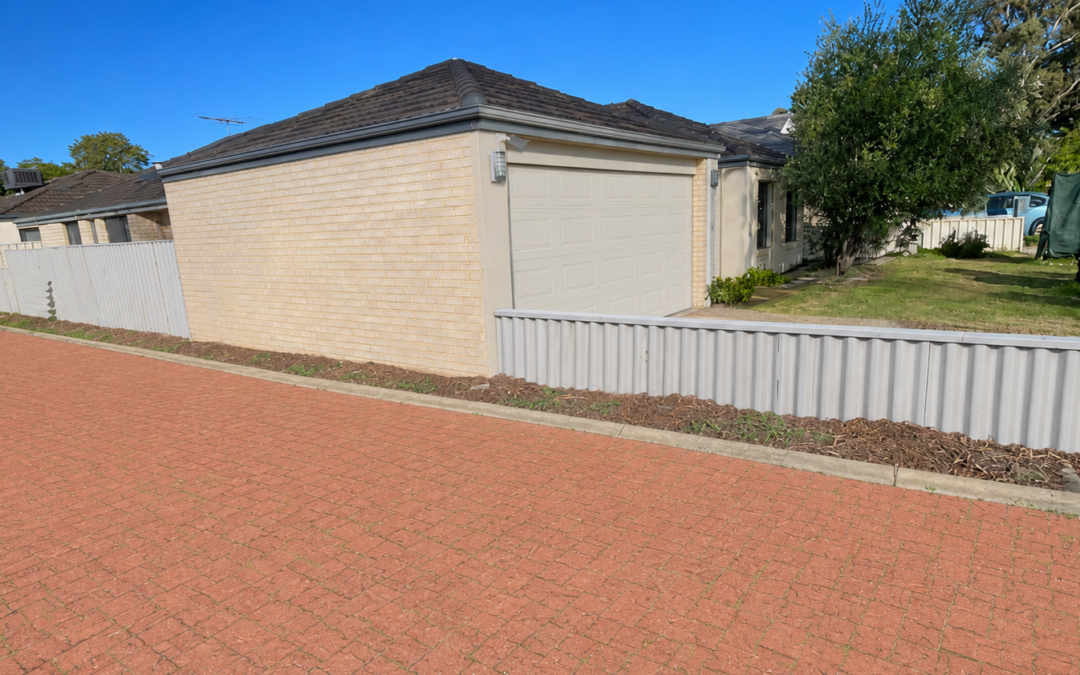
If you’ve got an older fence around your Perth property, chances are you’ve wondered whether it’s asbestos or simply an old Hardifence panel.
It’s one of the most common questions we get from homeowners across Perth, especially after recent storms have damaged ageing boundary fences throughout many Perth suburbs. When panels start cracking, leaning or falling over, people naturally want to know what they’re dealing with before organising repairs or replacement.
The challenge is that many homeowners assume every old fibre cement fence contains asbestos. In reality, that’s not always the case.
Some older fences do contain asbestos, while others are non-asbestos fibre cement products such as Hardifence. The problem is that they often look remarkably similar, making it difficult to know the difference just by looking at them.
Most importantly, if you’re unsure what your fence is made from, don’t take chances. The safest approach is always to treat it as asbestos until it has been professionally assessed.
Why Perth Homeowners Are Asking This Question More Than Ever
Across Perth, thousands of homes still have the original boundary fences that were installed decades ago.
Many of these fences were built using fibre cement products commonly known as Super 6 fencing or fibro fencing. While these products were popular because they were affordable, durable and low maintenance, some older versions contained asbestos fibres.
With many of these fences now reaching the end of their lifespan, homeowners are increasingly dealing with:
- Storm-damaged fence panels
- Leaning boundary fences
- Cracked or broken sections
- Neighbour disputes about fence replacement
- Property renovations and upgrades
When it’s time to replace an old fence, one question usually comes up first:
Is it asbestos?
Unfortunately, there isn’t always a simple answer.
What Is Super 6 Fencing?
If you’ve lived in Perth for any length of time, you’ve probably heard the term “Super 6 fencing.”
Super 6 was a widely used fibre cement fencing product that became extremely popular throughout Western Australia. You’ll still see it throughout older suburbs such as Morley, Gosnells, Armadale, Belmont, Midland, Cannington, Thornlie and many others.
The distinctive grey panels became a common boundary fence solution because they were:
- Cost-effective
- Long-lasting
- Fire resistant
- Suitable for Perth’s harsh weather conditions
However, because asbestos was commonly used in building products during certain periods, many homeowners now associate all Super 6 fencing with asbestos.
That’s where much of the confusion begins.
Does Every Super 6 Fence Contain Asbestos?
No.
One of the biggest misconceptions is that every old fibre cement fence contains asbestos.
While many older fencing products did contain asbestos, later fibre cement products were manufactured without it. Some Hardifence products installed in more recent decades are completely asbestos-free.
This means two fences sitting side by side may look almost identical while containing entirely different materials.
Unfortunately, age alone isn’t enough to determine whether asbestos is present.
That’s why assumptions can be risky.
Hardifence vs Asbestos Fencing: Can You Tell the Difference?
This is where things become difficult for homeowners.
Visually, asbestos fencing and Hardifence fencing can be extremely similar.
They often share:
- Similar grey colouring
- Comparable panel thickness
- Similar surface texture
- Matching post and rail designs
- Decades of weathering and wear
We’ve inspected countless fences throughout Perth where homeowners were convinced they had asbestos fencing, only to discover the materials were different than expected.
We’ve also seen situations where homeowners assumed a fence was safe to remove, only to later discover asbestos was present.
The reality is that visual identification alone is often unreliable.
Even experienced fencing contractors can require further assessment before confirming exactly what material a fence contains.
Signs Your Fence Could Contain Asbestos
While there is no way to guarantee identification through visual inspection alone, there are some factors that may indicate a higher likelihood of asbestos being present.
These include:
The Fence Was Installed Before the Late 1980s
Older fencing products are generally more likely to contain asbestos than newer fibre cement products.
The Fence Appears Original to the Property
Many Perth homes built during the 1950s, 1960s and 1970s still have their original boundary fencing.
There Are No Installation Records
If the property has changed hands several times, information about the fence’s age and materials may no longer exist.
The Fence Has Been Standing for Decades
Long-standing fibre cement fences may warrant professional assessment before any removal work begins.
Remember, these factors do not confirm asbestos. They simply suggest caution may be appropriate.
What You Should Never Do
When homeowners become concerned about asbestos, it’s natural to want answers straight away.
However, there are several things you should never do if you suspect a fence may contain asbestos.
DO NOT:
- Drilling holes
- Cutting panels
- Breaking sections off
- Scraping surfaces
- Sanding materials
- Pressure cleaning the fence
- Attempting DIY removal
These activities can disturb asbestos fibres if they are present.
The safest option is always to leave the fence undisturbed until it can be professionally assessed.
A good rule to remember is:
If in doubt, treat it as asbestos until proven otherwise.
What Happens If Storm Damage Has Already Occurred?
Recent storms across Perth have left many older fences damaged, cracked or partially collapsed.
This can create additional concerns for homeowners who suspect asbestos may be present.
If your fence has already suffered storm damage:
- Avoid touching damaged panels
- Restrict access to the affected area where practical
- Do not attempt temporary repairs yourself
- Contact a licensed asbestos removal specialist for advice
Damaged materials require careful handling to minimise potential risks.
Professional assessment becomes even more important when a fence has already been disturbed by severe weather.
Why Choosing a Licensed Asbestos Removal Company Matters
Not every fencing company is licensed to remove asbestos-containing materials.
If asbestos is present, removal must be handled correctly to protect homeowners, neighbours and workers.
That’s why choosing a licensed asbestos removal contractor is critical.
A licensed provider understands:
- WA asbestos regulations
- Safe removal procedures
- Containment requirements
- Approved disposal methods
- Documentation and compliance obligations
Professional asbestos removal isn’t simply about taking down a fence. It’s about ensuring the entire process is completed safely and legally. If you’re ever unsure, use the Western Australian Department of Energy, Mines, Industry Regulation and Safety (DMIRS) online licence search to verify that your https://ols.demirs.wa.gov.au/search/result/2308372 and compliant before any work begins.
Why Removal and Replacement Should Be Done Together
Many homeowners initially focus only on removing the old fence.
However, in most situations, the best outcome is working with a company that can handle both asbestos fence removal and fence replacement as part of the same project.
This approach offers several benefits:
- One contractor from start to finish
- Faster project completion
- Less disruption to neighbours
- Reduced administration and coordination
- Seamless transition to a new fence
Instead of managing multiple trades, homeowners can deal with a single experienced team that handles everything.
Why Perth Homeowners Choose Firm Fencing
At Firm Fencing, we regularly assist Perth homeowners who are unsure whether their existing fence contains asbestos.
Our team understands the unique challenges associated with older fencing throughout Perth suburbs and the importance of taking a safety-first approach.
Firm Fencing holds a:
Class B Asbestos Removal Licence – WR2483
This allows us to safely undertake eligible asbestos fence removal projects while ensuring compliance with Western Australian requirements.
What sets us apart is that we don’t just remove the old fence.
We can also install a brand-new replacement fence as part of the same project, saving homeowners time, stress and unnecessary delays.
Whether your fence has been damaged by storms, reached the end of its lifespan or you’re simply upgrading your property, we provide a complete solution from removal through to replacement.
For a free and fast quote, visit our website today!
Final Thoughts
Determining whether a fence is asbestos or Hardifence isn’t always straightforward.
Many older fibre cement fences look almost identical, which is why assumptions can be dangerous. While some older fencing products contain asbestos, others do not, and visual inspection alone is rarely enough to know for certain.
If you’re dealing with an ageing fence, planning a replacement or managing storm damage, the safest approach is simple:
If in doubt, treat it as asbestos until professionally assessed.
By working with a licensed asbestos removal company like Firm Fencing, you can ensure the fence is handled safely, removed correctly and replaced with a modern fencing solution that will serve your property for years to come.