

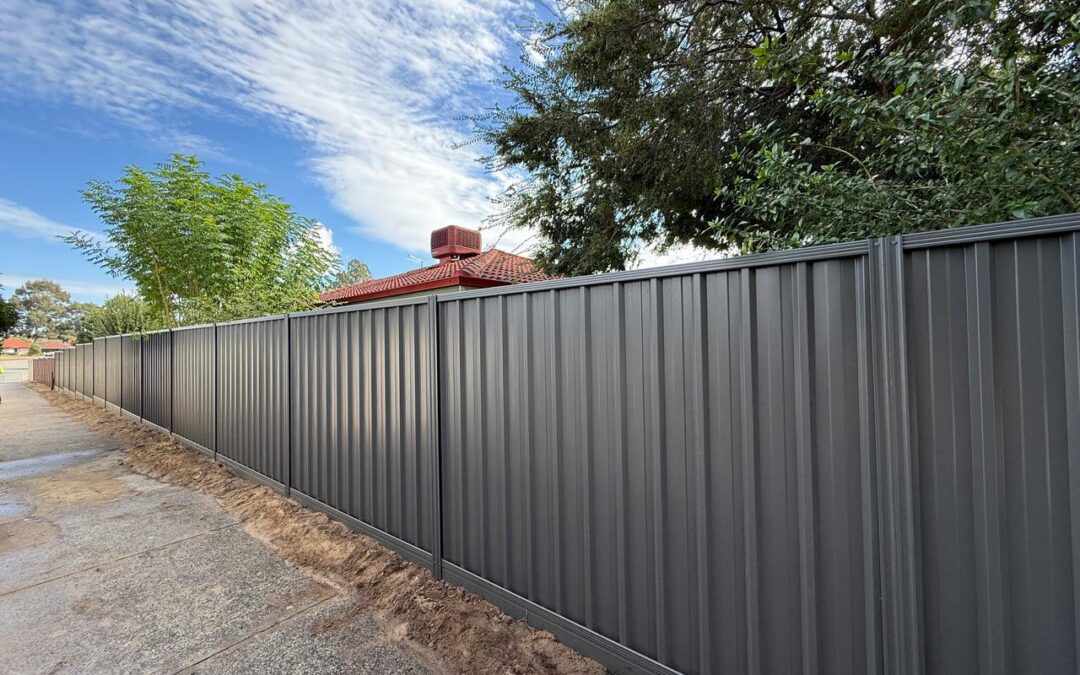
At Firm Fencing, we’ve seen many fences that have weathered over time. Exposure to sun, wind, moisture and general wear all add up. As experienced installers, we’ve seen just about every type of damage you can think of. The good news, though, is that the most common fence repair issues can be identified early and fixed before they turn into major expenses. Our guide below will help you spot the warning signs, understand what’s happening and know when it’s time to bring in a professional. If you’re already familiar with common fence repair issues and looking for fence repair Perth, then contact us now to book your free fence repair assessment. Or read on to find out more.
Why Fence Repairs Matter In Perth
Perth Storms and Wind Can Quickly Worsen Small Fence Damage
Strong winds don’t just knock fences over, they exploit existing weaknesses. A slightly loose panel or post might seem harmless enough, but under pressure, that weak point becomes the failure point. What could have been a minor fix can quickly escalate into wider damage across multiple sections.
Coastal Air and Moisture Can Accelerate Rust on Metal Fences
Salt in the air, especially in our coastal suburbs, speeds up corrosion. Once protective coatings are compromised, moisture reaches the metal underneath and rust begins to spread. We know that when left untreated, this weakens the structure and shortens the lifespan of your fence significantly.
8 Common Fence Repair Problems In Perth
Leaning or Loose Posts
A leaning fence is often a sign that something deeper is happening below ground. Soil can shift over time due to heavy rain or erosion during long dry periods. Poorly installed footings may also loosen, allowing posts to move. Timber posts are particularly vulnerable if the base has started to rot underground, weakening their grip and stability.
Rotting Timber Rails or Palings
Timber fences naturally absorb moisture, especially where they contact the ground. Over time, this leads to decay at the base or along horizontal rails where water can sit. Without proper sealing or drainage, the wood softens, loses strength and becomes prone to breaking under pressure.
Termite Damage in Timber Fences and Gates
We know that termites attack homes, but they often target fences first. Because the damage happens internally, a fence may look fine on the outside while being structurally compromised within. This hidden weakening can cause sudden failures, especially in gates or load-bearing sections.
Rust and Corrosion on Metal Fencing
Metal fences rely on protective coatings to prevent oxidation. Once damaged or worn away, rust begins forming beneath the surface. In coastal areas, this process accelerates rapidly due to the salts in the air. Over time, corrosion eats through panels, fixings and rails, reducing overall strength.
Storm or Impact Damage
High winds, falling branches or accidental impacts can bend panels or dislodge entire sections. Even if the damage looks isolated, the surrounding structure may have absorbed stress, making it more vulnerable to future failure.
Loose Fixings and Rattling Panels
Fences expand and contract with temperature changes. Over time, this movement loosens screws, brackets and rivets. What starts as a slight rattle in the wind can lead to panels shifting out of place or detaching entirely.
Gate Issues (Sagging, Hinge Wear, Latch Misalignment)
Gates carry more weight and experience more movement than the rest of the fence. Hinges wear down, posts shift and alignments change. This leads to dragging, sticking, or difficulty latching, often a sign the supporting structure needs attention.
Fading or Peeling Paint and Powder Coat
Surface coatings are more than cosmetic: they protect the material underneath. When paint fades or coatings peel, timber becomes exposed to moisture and metal becomes vulnerable to rust. This often marks the early stages of larger common fence repair issues.
Quick DIY Checks Before It Gets Worse
Post and Panel Stability Check (Push Test and Sightline)
- Gently push on sections of the fence
- Look along the line for dips or leaning
- Movement usually indicates underlying structural problems.
Check for Water Traps (Soil Contact, Garden Beds, Pooling at Base)
- Soil or mulch piled against fencing holds moisture
- Poor drainage accelerates rot and corrosion.
Look for Rust Bubbles, Flaking Coatings and Loose Hardware
- Bubbling paint often signals corrosion underneath
- Loose fixings suggest movement or material fatigue.
Gate Function Test (Dragging, Latch Alignment, Smooth Swing)
- Open and close the gate fully
- Check for resistance, scraping, or misalignment.
Repair Or Replace (How To Decide Fast)
Repair Suits Isolated Damage
If the issue is limited to one section, like a single post, panel, or gate, then repairing most common fence repair issues is usually the most cost-effective solution. Addressing small problems early helps avoid larger structural issues later.
Replace Suits Repeated Failures
If multiple sections are failing or repairs keep recurring, replacement may be the smarter long-term investment. Widespread rot, corrosion or instability often signals that the fence has reached the end of its lifespan.
Match Profiles and Materials For Appearance Consistency
A professional repair ensures new sections blend seamlessly with existing materials. This is particularly important for maintaining street appeal and property value.
Repair vs Replace Checklist
Repair If:
- Damage is isolated
- Structure is mostly sound
- Issue is recent (e.g. minor storm impact).
Replace If:
- Multiple sections are failing
- Repairs are becoming frequent
- Structural integrity is compromised.
This is a key part of effectively evaluating common fence repair Perth issues.
When To Call A Professional
Situation |
What It Means |
| Fence is leaning or unstable | Likely structural failure requiring professional stabilisation |
| Visible termite or severe timber damage |
Internal weakening that needs expert assessment |
| Rust has spread across multiple areas |
Structural integrity may already be compromised |
| Gate no longer aligns or functions properly | Underlying movement or post issues affecting the operation |
| After storms with visible distortion | Hidden damage may exist beyond what’s immediately visible |
Shared Boundary Fences In Wa (Who Pays?)
Many Dividing Fence Repairs are Shared Between Neighbours Under the WA Process
In Western Australia, boundary fences are typically a shared responsibility. This means both neighbours may need to contribute to repair or replacement costs.
Steps Before Repairs (Notice, Agreement and Keeping Records)
- Notify your neighbour before starting work
- Agree on scope and costs where possible
- Keep written records of communication.
Following this simple process helps avoid disputes and ensures a smoother repair experience.
How Firm Fencing Handles Fence Repairs
Fast Inspection and Clear Scope with a Repair vs Replace Recommendation
At Firm Fencing, we assess each situation carefully, identifying whether a targeted repair or full replacement will deliver the best long-term outcome for you. Our goal is always to provide clear, practical advice you can trust.
Better Fixings and Finishes Suited to Local Conditions
We use materials and methods suited to Perth’s climate, helping reduce future wear and extending the life of your fence.
Need Fence Repairs?
Book a Free Fence Repair Assessment with Firm Fencing
Thinking your fence needs attention in Perth? Contact our team here at Firm Fencing for expert advice and a clear recommendation on the best repair option for your fence.