

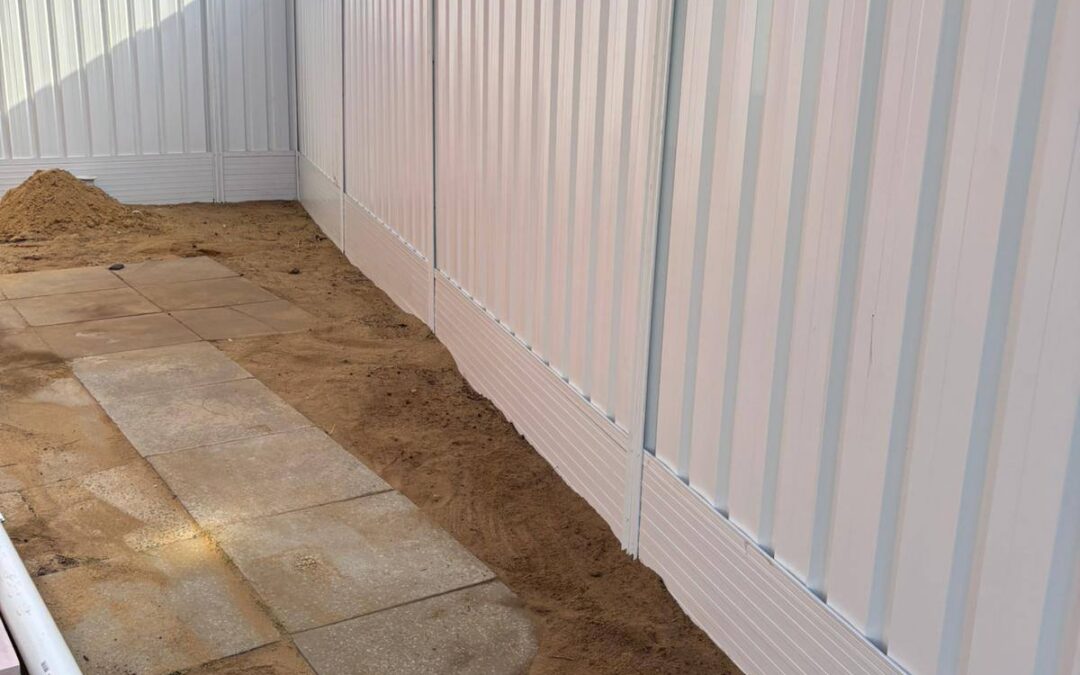
One question we get asked often when measuring and quoting a job is whether or not their neighbour will have to pay for half of this new fence? In short, If you share a boundary fence in Western Australia, your neighbour will often need to contribute to the cost, but it is not an automatic “pay half of whatever I choose” rule. The key idea is a sufficient dividing fence: if the fence is needed, reasonable, and properly handled, adjoining owners generally share the cost of installation or repairing it. This guide explains the practical steps, common exceptions, and how to avoid turning a simple fence installation WA project into a neighbour dispute.
How Dividing Fence Costs Are Shared In WA
Under WA’s dividing fence rules, adjoining landowners will generally share the reasonable cost of constructing or repairing a sufficient dividing fence. However, exactly what each owner is required to contribute depends on the type of fence, whether the work is necessary, whether the correct notice or agreement process has been followed, and whether any exceptions apply.
Importantly, sharing the cost does not necessarily mean your neighbour has to pay half of whatever fence you choose. If you want a higher-standard or more expensive fence than what is considered sufficient, you may need to cover the additional cost unless your neighbour agrees to the upgrade.
So, rather than simply asking, “Does my neighbour have to pay half?” The more useful question is whether the proposed fence is reasonable, sufficient and has been agreed upon through the proper process.
What Counts As A Dividing Fence In WA?
A dividing fence is simply the fence that separates two neighbouring properties. In WA, however, the important legal term is a “sufficient fence” under the Dividing Fences Act 1961.
What counts as a sufficient fence can depend on your local council’s fencing requirements, the type of properties involved and, in some cases, what both neighbours agree is appropriate. Requirements around things like fence height, materials and construction can therefore vary between different areas of WA.
So, what does that actually mean for homeowners?
Essentially, your neighbour’s responsibility to contribute is generally based on the reasonable cost of a fence that does the job and meets the relevant requirements, not necessarily the exact fence you would personally like to install.
For example, if a standard 1.8-metre Colorbond fence meets the requirements for your property, but you would prefer additional height or decorative screening, your neighbour may only be required to contribute towards their share of the standard fence. Any upgrades above what is considered sufficient may be yours to cover unless you both agree otherwise.
That’s why it’s worth checking your local council requirements and agreeing on the type of fence with your neighbour before getting too far into quotes or booking installation.
The Practical Meaning Of “Half The Cost”
When people talk about splitting a fence bill, they often picture a simple 50/50 invoice. Sometimes it really is that straightforward: two neighbours agree the old fence is failing, they choose a compliant replacement, accept a quote, and each pays half. That is the ideal version.
Real life is messier. One neighbour may want Colorbond while the other is happy with the existing timber fence. One may want a higher fence for privacy, while the other thinks the current fence still does its job. One may want to replace a fence during a renovation, while the other sees no urgency. The law helps frame the discussion, but it does not remove the need for practical agreement.
A fair conversation about cost should cover:
- Need: Is there no fence, an insufficient fence, or a fence that genuinely needs repair or replacement?
- Standard: Is the proposed fence a sufficient fence under local requirements?
- Scope: Which boundary length is included, and are gates, returns, retaining walls, or decorative panels excluded?
- Quotes: Has each owner had a chance to review the cost or obtain another quote?
- Timing: When will work happen, and does either property need access arrangements?
- Payment: Will each owner pay the contractor directly, or will one reimburse the other?
The more specific you are, the less room there is for disagreement later. A vague text saying “we’ll go halves” is better than nothing, but a written agreement that identifies the fence type, length, contractor, quote amount, timing, and payment split is much safer.
A “Sufficient Fence” Is Not Always The Fence One Owner Wants
The most common misunderstanding is assuming preference equals necessity. If the existing fence is already sufficient, a neighbour may not have to contribute simply because you want a newer, taller, more stylish, or more private option. Local government guidance in WA commonly treats fencing disputes as civil matters between adjoining owners, and the government guidance highlights that higher-standard fencing can affect what you can recover.
For example, if a basic compliant fence would resolve the issue but one owner wants a premium material or a custom finish, the other owner may only be responsible, if at all, for their share of the sufficient fence amount. The upgrade portion should be discussed separately. This is a good way to keep the relationship friendly: separate the legal baseline from the personal preference.
It also helps when comparing quotes for fence installation WA homeowners are considering. Ask contractors to itemise the quote where possible. If the quote includes demolition, disposal, new posts, special panels, difficult access, retaining components, or extra height, those details help both owners see what relates to a sufficient dividing fence and what may be an upgrade.
How Should You Approach Your Neighbour Before Installing A Fence?
Start with a calm conversation, then follow it with written details. Tell your neighbour what problem you are trying to solve, what type of fence you propose, where it will be located, how much it is expected to cost, and when you would like the work done. WA government guidance encourages owners to discuss the proposed fence, its location, type, and cost before construction, and notes that written agreements help clarify what has been agreed if a dispute later reaches court.
At Firm Fencing, we always encourage the person obtaining the quote to have a friendly conversation with their neighbour first. Explain what’s happening with the existing fence, why you’re looking at repairing or replacing it, and what you think could be a suitable solution. Starting the conversation early can make the entire process much smoother for everyone involved.
We’re also happy to speak with your neighbour directly if it helps. We can introduce who Firm Fencing is, explain our experience and reputation, walk them through the proposed works and provide a clear breakdown of the costs, so both parties understand exactly what is being quoted before anything moves forward.
A Simple Pre-Installation Checklist
Before you approve any work, work through this list:
- Check whether the fence is on the correct boundary or whether a boundary survey may be needed.
- Look up your local government’s fencing requirements or contact the council for general guidance.
- Take photos of the existing fence condition, especially if repairs or replacement are needed.
- Get at least one clear quote, give your neighbour the opportunity to suggest another, and let them know they’re welcome to contact the proposed installer directly with any questions.
- Confirm whether the quote is for a sufficient fence or includes upgrades.
- Put the agreed fence type, cost split, payment method, and timeframe in writing.
- Keep copies of notices, emails, texts, quotes, invoices, and photos.
This may feel formal for a backyard fence, but it protects both sides. It also gives your installer clearer instructions, which can reduce delays, access issues, and last-minute changes.
Notice, Agreement, And Why Paperwork Matters
Written agreement is not just about legal positioning; it is about memory. People forget conversations, misunderstand verbal estimates, and hear what they want to hear when money is involved. A short written record can prevent weeks of awkward back-and-forth.
If you are asking a neighbour to contribute, the details should be specific enough that they can make an informed decision. “Pay half the fence” is not specific. “Pay half of the attached quote for a 1.8 metre compliant dividing fence along the western boundary, excluding the side gate and decorative screening” is much clearer.
The WA government guide also explains formal notice processes for certain situations, including written notices signed and delivered personally or by registered post, and it sets out different steps for constructing or repairing dividing fences. If a neighbour objects within the relevant period, the dispute may need to be resolved through the Magistrates Court.
Repairs Are Treated Differently From Cosmetic Replacement
Repairs often feel more urgent than new construction. A fence may be leaning after a storm, damaged by age, or unsafe because posts have rotted. If a dividing fence needs repair, either owner may give notice asking the adjoining owner to contribute to the repair, and WA guidance sets out a process where the other owner has a limited time to object before repairs proceed.
However, “repair” should still mean necessary work, not a cosmetic refresh disguised as maintenance. Replacing a few damaged panels is different from replacing a whole fence because one side wants a new look. If the fence is still sufficient, your neighbour may have a reasonable basis to question whether full replacement is needed.
Damage caused by one owner’s actions can also change the cost conversation. Some local government guidance notes that if a fence is damaged by something caused by one owner, such as a falling branch or fire resulting from that owner’s actions, that owner may be responsible for the repairs.
What Happens If The Property Next Door Is Vacant?
Vacant adjoining land is one of the big exceptions that surprises property owners. WA government guidance says that, unless there is an agreement or court order, you cannot generally recover costs from adjoining vacant land for constructing a sufficient fence until certain events occur, such as a substantial building or structure being completed, the land being occupied, or lawful occupation being permitted.
This does not mean you can never build a fence next to vacant land. It means you should be careful about assuming immediate reimbursement. If you proceed without agreement, you may need to wait until the conditions for claiming are met, and even then the claim relates to the value of the fence as estimated at the date of the claim.
Good communication still helps. If the vacant block has an identifiable owner, notify them of the proposed fence, the type, the location, and the expected cost. Even where notice is not strictly required in that scenario, WA government guidance says doing so can help avoid later disputes about need, type, location, or cost.
What If Your Neighbour Refuses To Pay?
If your neighbour refuses to pay, do not rush into threats or start construction purely to force the issue. First, check whether the fence is genuinely insufficient, whether your proposed fence is reasonable, whether you followed the correct process, and whether the neighbour has raised a valid objection. If the dispute cannot be resolved, the Magistrates Court can determine issues such as the amount to be paid and the timeframe for payment in appropriate dividing fence matters.
It is worth separating refusal from disagreement. A neighbour who says “I won’t pay for that expensive option, but I’ll pay half of a standard compliant fence” may not be refusing their responsibility; they may be drawing the line at upgrades. Similarly, a neighbour who wants another quote may simply be checking whether the price is reasonable.
Before escalating, try this sequence:
- Clarify the issue in writing. State whether the fence needs repair, replacement, or new construction.
- Share evidence. Send photos, council guidance if relevant, and the quote.
- Offer options. For example, a standard fence split equally, with any upgrade paid by the owner requesting it.
- Invite them to speak with the quoting installer. Give your neighbour the option to contact the installer directly to talk through the quoted works, costs and any alternative options available. Sometimes that simple conversation can help smooth things over, particularly if the neighbour has questions about why certain work is required or where the money is being spent. It also helps ensure both homeowners feel informed and involved in the decisions being made.
- Set a reasonable response date. Avoid pressure tactics, but do not leave the matter open-ended.
- Consider mediation or advice. Legal Aid WA and community legal resources may help you understand your options before court.
Common Situations And How To Think About Them
Every boundary is a little different, but most disputes fall into familiar patterns. Thinking through the scenario calmly can help you decide whether a half-cost request is reasonable.
The Existing Fence Is Falling Down
If the dividing fence is no longer doing its job, a shared contribution is more likely to be appropriate, provided the replacement is a sufficient fence and the process is handled properly. Take photos, get a sensible quote, and avoid upgrading the scope without agreement. If urgent safety issues exist, document them carefully.
The Fence Is Old But Still Functional
Age alone does not always justify replacement. A neighbour may not want to pay simply because the fence looks tired. If it still meets the local standard and functions as a sufficient fence, the owner wanting a cosmetic upgrade may need to pay for that upgrade themselves.
One Neighbour Wants a Higher or More Expensive Fence
This is where disputes over half fence cost WA projects often start. The practical compromise is to price the sufficient fence separately from the upgrade. Both owners may share the sufficient portion, while the neighbour wanting extra height, premium materials, or decorative features pays the additional cost.
The Fence Includes Retaining Work
Retaining walls and fences are not the same thing. Legal Aid WA notes that retaining wall law is complex, so do not assume retaining costs automatically fall into a simple 50/50 fence split. Building work involving retaining walls is generally governed by the Building Act 2011 in WA.
Your Neighbour Replaced the Fence Without Discussing It With You
Sometimes a neighbour may arrange for a dividing fence to be replaced or installed before discussing the proposed work or costs with the adjoining homeowner, and then ask them to contribute afterwards.
If this happens, don’t assume that receiving an invoice automatically means you are required to pay half. Dividing fence responsibilities in WA depend on the individual circumstances and whether the appropriate requirements and processes have been followed.
From a practical perspective, this is exactly why we encourage neighbours to discuss the condition of the fence, proposed solution, quote and expected cost split before work begins. It gives everyone an opportunity to ask questions and understand what is being proposed before committing to the project.
Firm Fencing can help explain the proposed fencing works, quote and available options, but we cannot provide legal advice or determine what either homeowner is legally required to pay. If there is disagreement about liability or the correct process, homeowners should refer to current WA Government guidance or seek independent legal advice.
Choosing A Fence Installer Without Creating A Cost Dispute
A smooth fence installation WA project usually starts with a clear brief. Tell the installer that the fence is a dividing fence and that the cost may be shared. Ask for a quote that describes the material, height, length, removal of the old fence, disposal, access requirements, and any exclusions.
If you are comparing quotes, do not look only at the final number. A cheaper quote may exclude removal or use a different material. A higher quote may include difficult access, stronger posts, or disposal fees. The more transparent the quote, the easier it is for both neighbours to see whether the proposed split is fair.
It can also help to ask the contractor to separate optional extras. For example, the base quote might cover a compliant dividing fence, while an add-on covers decorative screening. That keeps the shared cost tied to the sufficient fence and prevents one owner’s preferences from being pushed onto the other.
Keeping The Relationship Neighbourly
Fencing work involves a shared part of two properties, so good communication can make the whole process much easier. Even when both homeowners agree that something needs to be done, there can still be different preferences around the fence style, timing, cost or finished result.
Where possible, start with a friendly conversation about what’s happening with the existing fence and what you’re hoping to achieve. Sharing the proposed solution and quote early gives your neighbour an opportunity to understand the work, ask questions and feel included in the process.
A few simple things can help keep the conversation positive:
- Give your neighbour time to look over the proposed works and quote.
- Be clear about what is included in the quote and any optional upgrades being considered.
- Give them the opportunity to ask questions or suggest alternatives.
- Let them know they can speak directly with the quoting installer if they would like more information about the proposed work or costs.
- Discuss practical details such as timing and access to the properties before installation.
At Firm Fencing, we’re always happy to talk through a quote with both homeowners and explain exactly what has been proposed. Our role is not to determine who is responsible for paying what, but to make the fencing side of the process as clear and straightforward as possible for everyone involved.
Key Takeaway For WA Property Owners
Questions around who pays for a dividing fence are something we’re asked about regularly at Firm Fencing. While every situation is different, we find that fencing projects are generally much easier when both homeowners are involved in the conversation early, understand what is being proposed and have had the opportunity to ask questions about the quote.
A friendly conversation about the condition of the existing fence, a clear quote, reasonable expectations and transparency around the proposed works can go a long way. In our experience, when homeowners approach the process fairly and communicate from the beginning, most shared fencing projects move forward smoothly.
As the fencing installer, there is also a limit to the role we can play. Firm Fencing can inspect the fence, recommend suitable fencing options, prepare a clear quote and talk either homeowner through the proposed works and costs. We’re also more than happy to speak with both neighbours if there are questions about what has been quoted.
A Note On Legal Information
The information in this article is general in nature and is provided to help WA homeowners better understand some of the considerations that can arise when planning work on a dividing fence. It should not be considered legal advice.
Firm Fencing cannot determine what either homeowner is legally required to pay, resolve a dispute between adjoining owners, or provide advice about an individual homeowner’s legal rights or obligations.
If you are unsure about your responsibilities, the correct process to follow, or there is a disagreement about liability, we recommend referring to current WA Government guidance or seeking independent legal advice before proceeding.